


Optimization of the industrial wastewater treatment plant (printing and textile finishing sector)
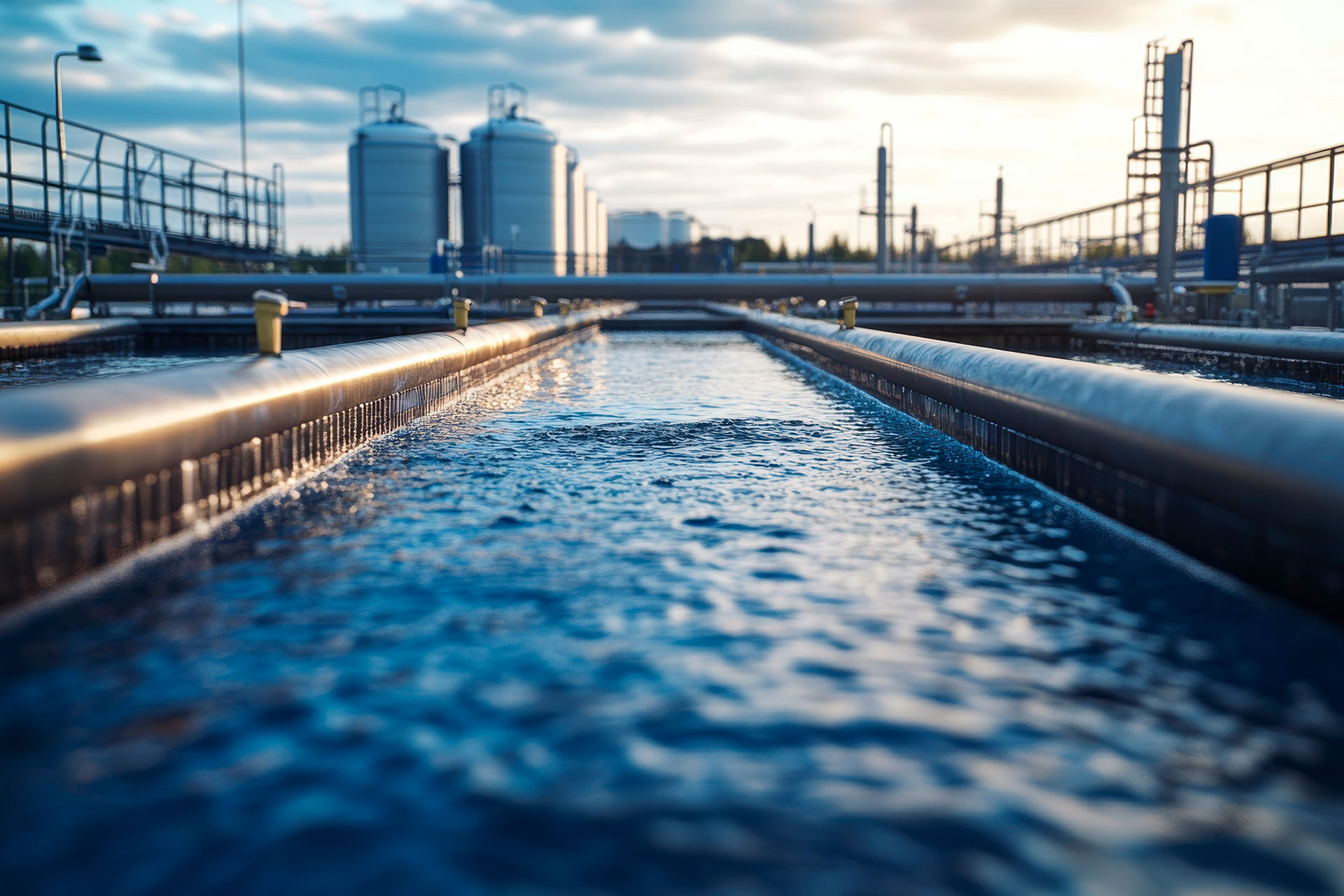
Objective
Optimisation of the treatment efficiency of the industrial wastewater treatment plant, exploiting the available treatment volumes, and improvement of energy efficiency, with a reduction in operating costs sufficient to guarantee an acceptable return on investment in terms of time.
Critical issues
The plant configuration presented several critical issues from technical and energy perspectives
- excessively long retention times in the equalisation and balancing tanks;
- absence of a specific biological denitrification section;
- low dry matter content in the excess sludge sent to the sludge treatment line;
- obsolete and energy-inefficient mechanical equipment;
- lack of adequate sensors to control the treatment process.
Results
The approach adopted formed the basis for the results obtained. This began with an in-depth study of the current state of the plant, followed by the qualitative and quantitative characterisation of the incoming wastewater, which included respirometric analysis. The plant configuration and automation system were then optimised with a particular focus on energy efficiency and payback period evaluation. Thanks to this integrated approach, the intervention, divided into three functional lots, led to a significant reduction in energy consumption by adopting more efficient technologies and decommissioning unnecessary components. Process and sludge line optimisation has enabled a rapid return on investment of approximately 3-4 years to be estimated.